
OuR Services
Solutions for circular, responsible, and innovative fashion.
We provide technology, consulting, and training to support companies, organizations, and institutions in their transition toward responsible fashion.
Re4Circular
Empowering circular fashion
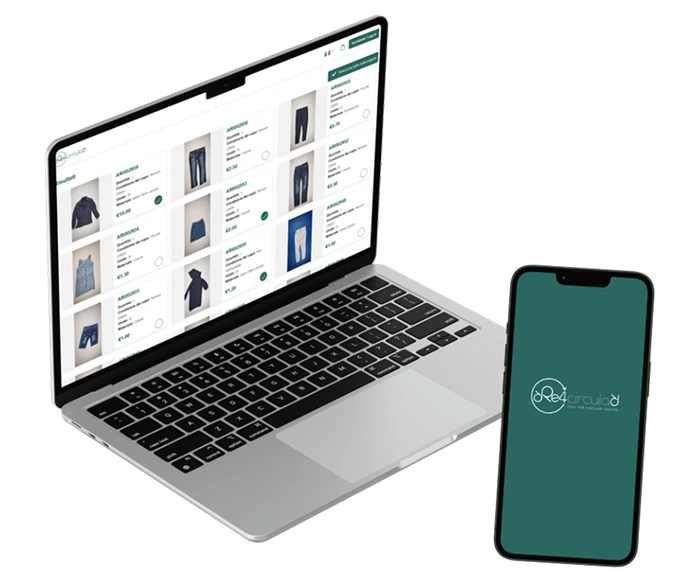
Re4Circular is the first digital platform for circular fashion powered by artificial intelligence and designed to make the post-consumer textile value chain more efficient and responsible.
Thanks to an automated cataloging system and a B2B marketplace, it connects those who manage pre- and post-consumer textiles with circular organizations that reuse them in their activities.
Through Re4Circular marketplace, professionals can buy or sell textiles in bulk, while Atelier Riforma facilitates these connections and promotes new circularity projects.
OthEr SeRviceS
360° solutions for circular fashion
fOr cOmpaniEs
We support companies and organizations in their transition to sustainable models through strategic consulting and tailored training programs.
From eco-design to regulatory management, we help develop concrete solutions to integrate circularity into processes.
fOr InstitutiOn
We collaborate with public bodies and local authorities to develop circular textile management systems: from separate collection to traceability, to local economic models.
The RiVestiTo project in Turin is a concrete example: a city-wide pilot of our circular model.
fOr IndiviDuals
We promote a new fashion culture through events, workshops, educational activities, and artistic collaborations that engage diverse communities.
We work with citizens, schools, businesses, and institutions to make sustainability a shared value.
cOnsultinG & tRaininG
Atelier Riforma leverages its expertise in circular fashion to support companies, organizations, and educational institutions through tailored consulting and training sessions for professionals (and non-professionals) on a range of topics.
1
Support in the circular management of pre- and post-consumer textile products
2
Assistance with compliance to new EU regulations on sustainable fashion
3
Eco-design and the creation of partnerships for circular economy and social procurement
4
Design of new circular business lines within companies.
ExampleS Of ouR ClientS
Consulting for Green Pea Sustainability Retail Park
Supporting the company in developing a circular fashion offering, managing:
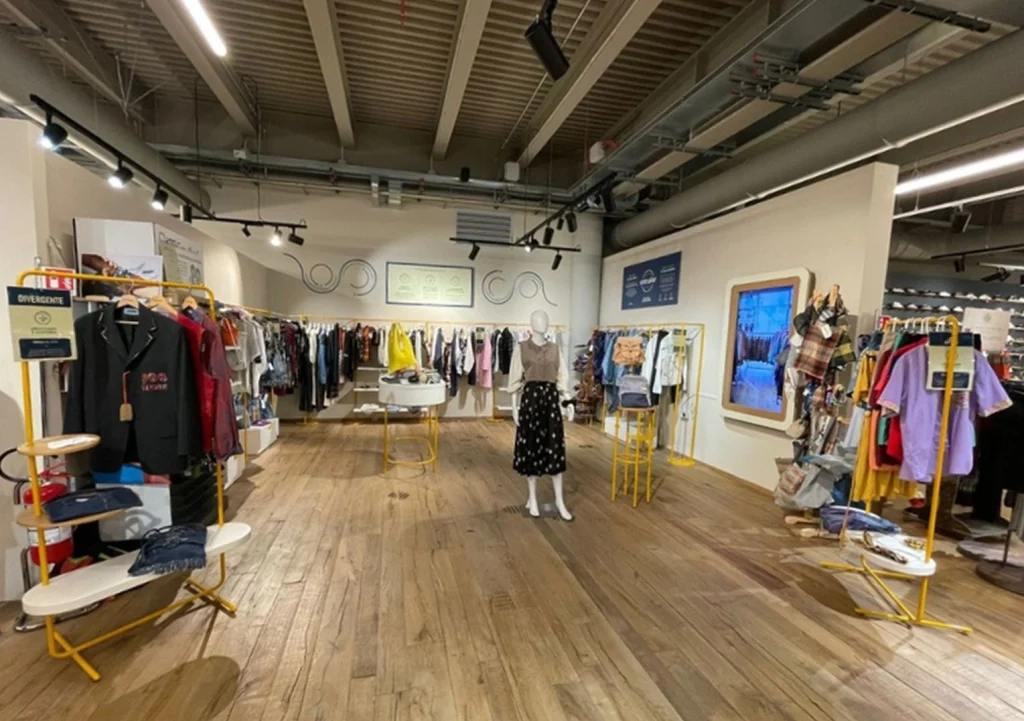
- The Circular Factory: a physical hub dedicated to circular fashion, featuring pre-loved and upcycled garments, independent brands, artisans, designers, and social enterprises; and an integrated take-back service.
- In-store events and educational activities: initiatives designed to engage the public, such as Circular Days, the alternative festival to Black Friday.
Lecture at “Out Of Fashion” Advanced Course
Topics covered:
- EU and Italian regulations on textile waste;
- Traceability and enabling technologies in the post-consumer value chain;
- Case studies of startups and innovative circular fashion projects;
- Strategies to engage consumers in sustainable practices;
- Fundraising and tenders: opportunities for startups, enterprises and NGOs.
RiveStito
project
RiVestiTo is a pilot project implemented in Turin to make textile waste management more circular and transparent.
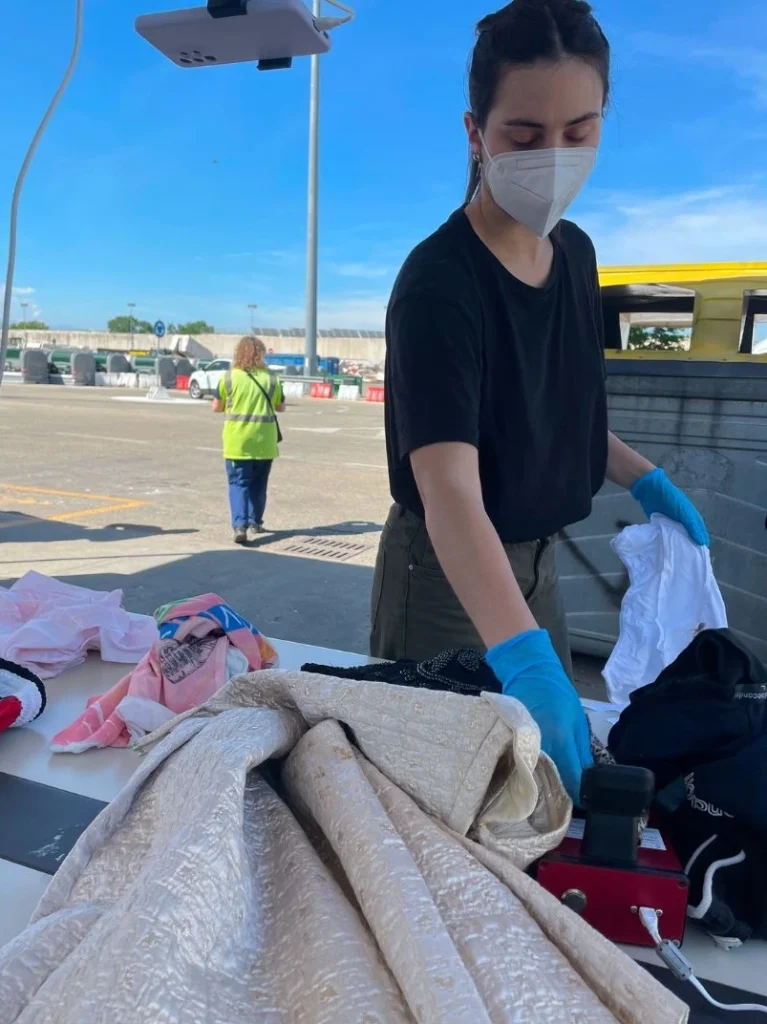
The use of Re4Circular was tested throughout the city of Turin. For six months, we catalogued and digitised samples of post-consumer textiles collected by the city’s five main collection entities, both through direct donations and street bins.
By uploading this data onto the platform, the municipality had an analysis and monitoring tool that ensured transparency on the quantities collected in the city and their characteristics.

Other Services providEd tO tEe municipAlity Of tuRin dUring thE projeCt
Context Analysis
Study of the EU and Italian regulatory framework on textile products, accompanied by:
- Mapping of local circular initiatives in the textile sector
- Survey of citizen behaviors regarding textile products
- Identification of organizations collecting post-consumer textiles and in-depth interviews with the five main ones (quantities, operational methods, management, and challenges).
Experimental Regulatory Corridor to Promote Circular Practices
During the corridor, citizens and businesses could directly deliver unused textile products to artisans and upcyclers, preventing them from being treated as waste.
Additionally, over 800 discarded uniforms from the Local Police were entrusted to 14 artisans for upcycling activities, instead of being destroyed.
Citizen Awareness Activities
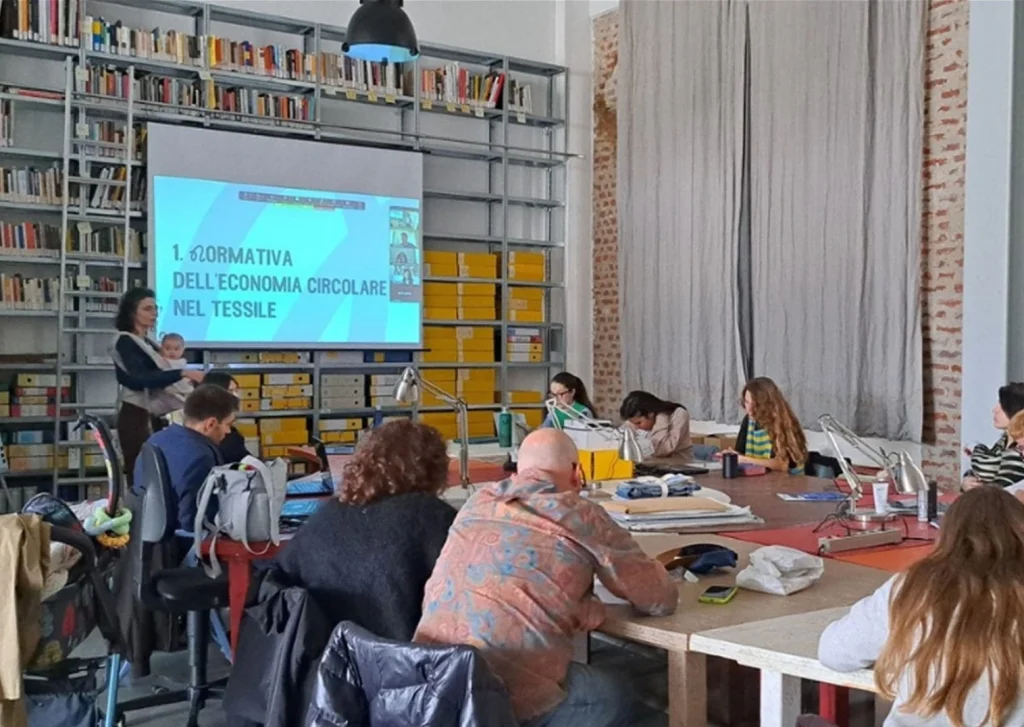
More than 34 in-person activities were organized, engaging over 1,700 participants, along with numerous online informative materials reaching over 150,000 users.
The goal was to promote garment reuse, repair, swapping, purchasing second-hand or recycled products, and the correct disposal of textiles at the end of their life cycle.
RiTessiAMO: our last project just begun
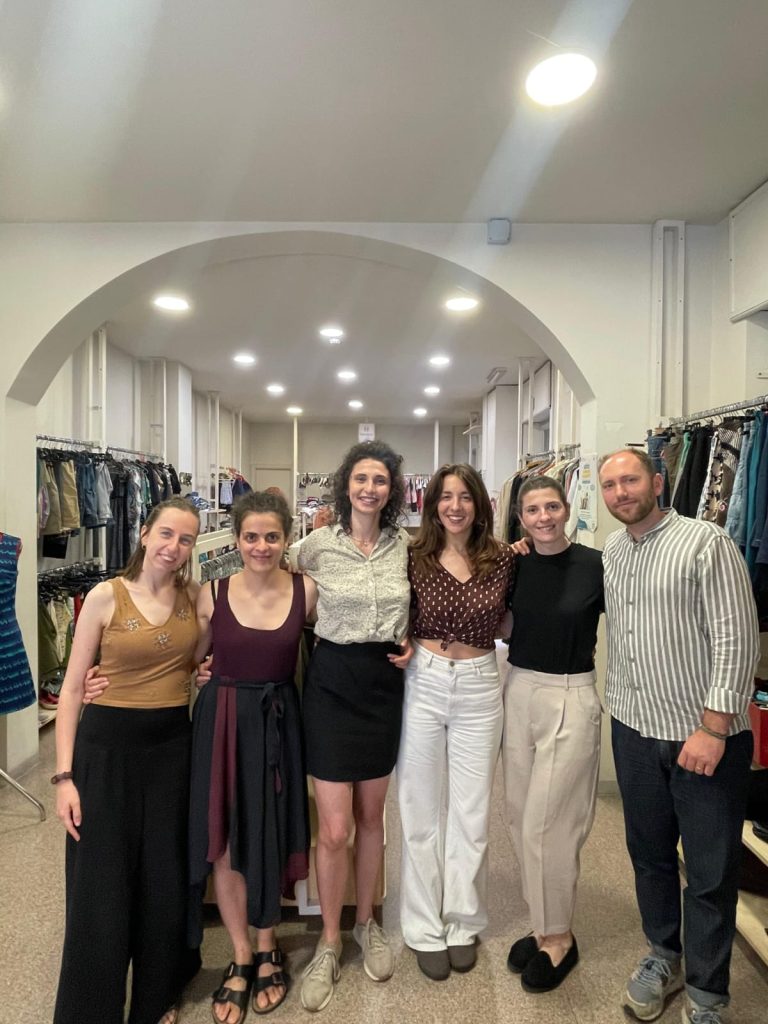
RiTessiAMO is a project funded by the City of Turin (through the call for proposals “Cultura e imprenditorialità incardinate nell’economia circolare e nel tessuto urbano”) which is testing an innovative model for recovering post-consumer textiles through reuse, upcycling, and – for the first time – fiber-to-fiber recycling. The project brings together expertise from the nonprofit sector (Progetto ABITO by San Vincenzo de Paoli), the industrial sector (DBT Fibre, with its Closeoop division), and the innovation sector (Atelier Riforma, the lead partner) to develop a local circular value chain, from the collection and sorting of materials to their transformation and reintroduction into the production cycle.
As part of the project, we’re providing our technologies and expertise: we supply two NIR spectroscopy readers to identify and sort textiles intended for recycling; we coordinate the management and distribution of textiles from local companies and organizations to artisans and upcyclers; and we use our Re4Circular marketplace to increase opportunities for textile valorization. We are also involved in raising awareness about sustainable fashion and organize training and consulting programs for businesses, professionals, and fashion students on the topics of eco-design and the circular management of textile waste.
cooming soon
Other Tools Under Development
A digital platform to manage the textile Extended Producer Responsibility (EPR) system, connecting all players in this value chain and centralizing the data needed for transparent management of flows and funds.
pRos
- Collect and analyse data submitted by textile operators
- Monitor quantities and types of textiles managed
- Manage eco-contributions received from producers
- Correctly distribute funds to cover operators’ costs
Post-Consumer Textile Operators
- Record quantities and types of textiles handled
- Track flows with other operators in the supply chain
- Enter the cost for their activities
- Make data available to the EPR system.
nAtional Coordination Center
- Receives aggregated data from different PROs
- Analyzes flows and quantities of textiles managed
- Evaluates overall efficiency of the EPR system
- Shares information with relevant authorities.
lOcal Authorities
- Consult data transmitted from their territory
- Verify textile separate collection rates
- Support planning of environmental policies
- Transmit information to higher-level authorities.
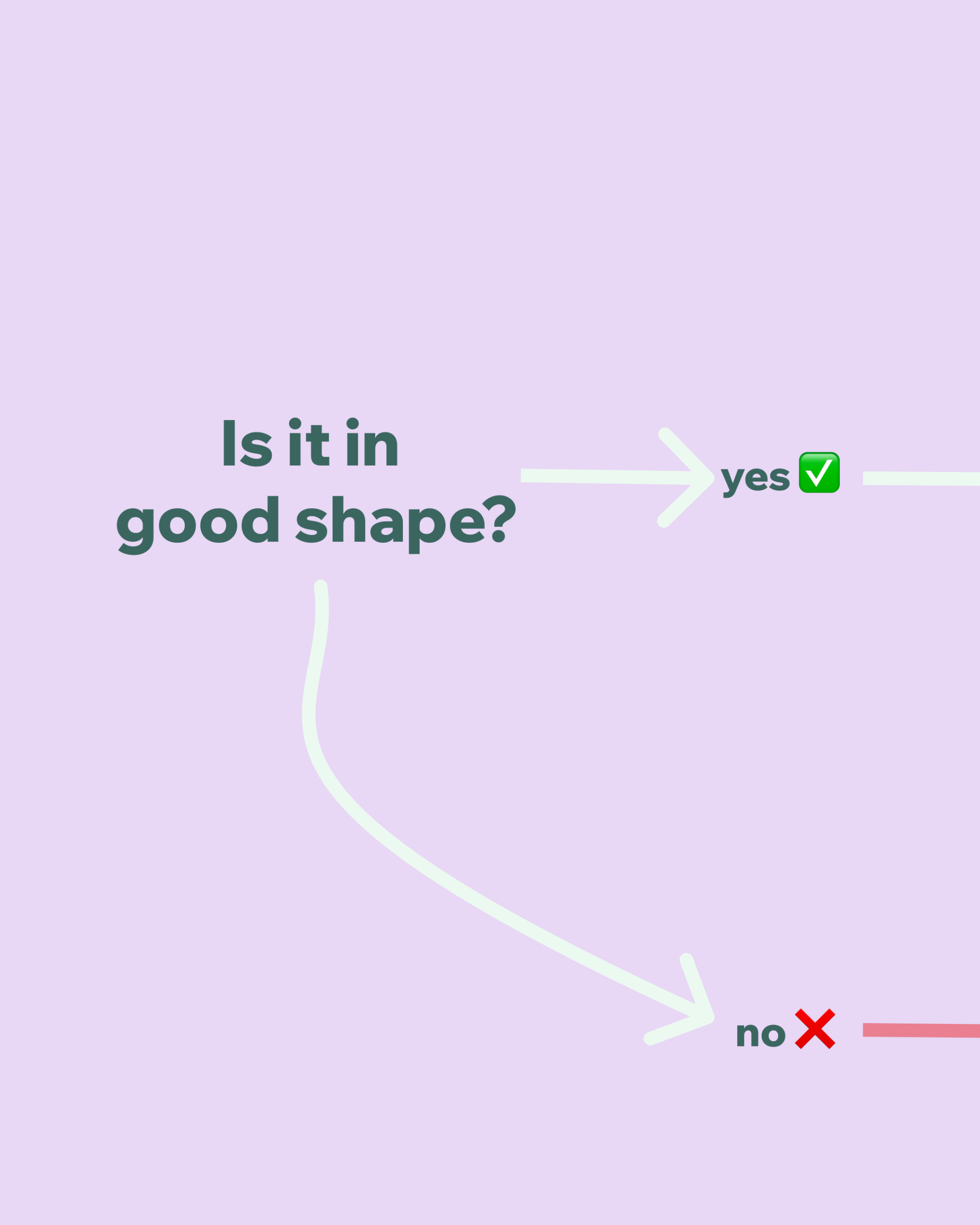
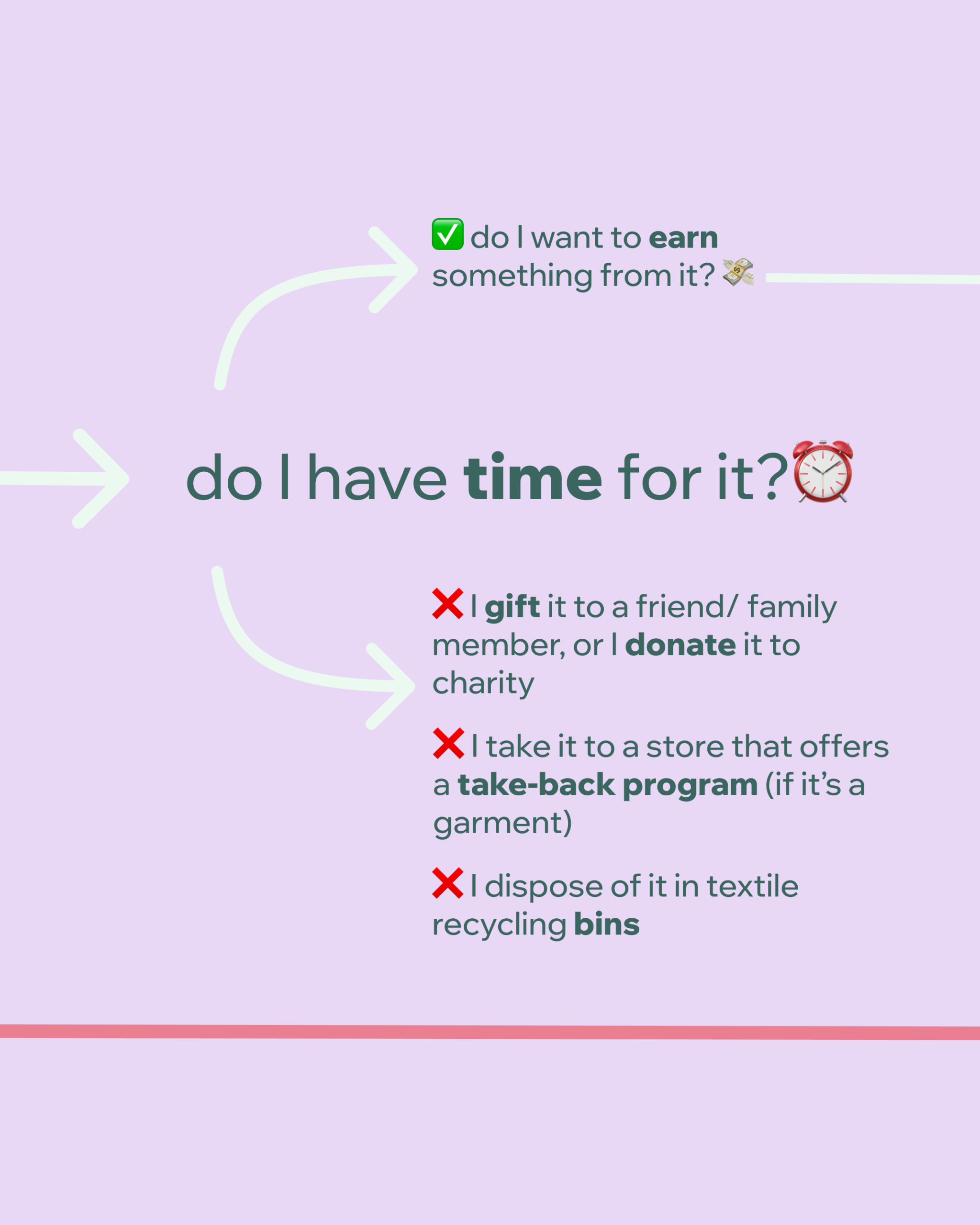
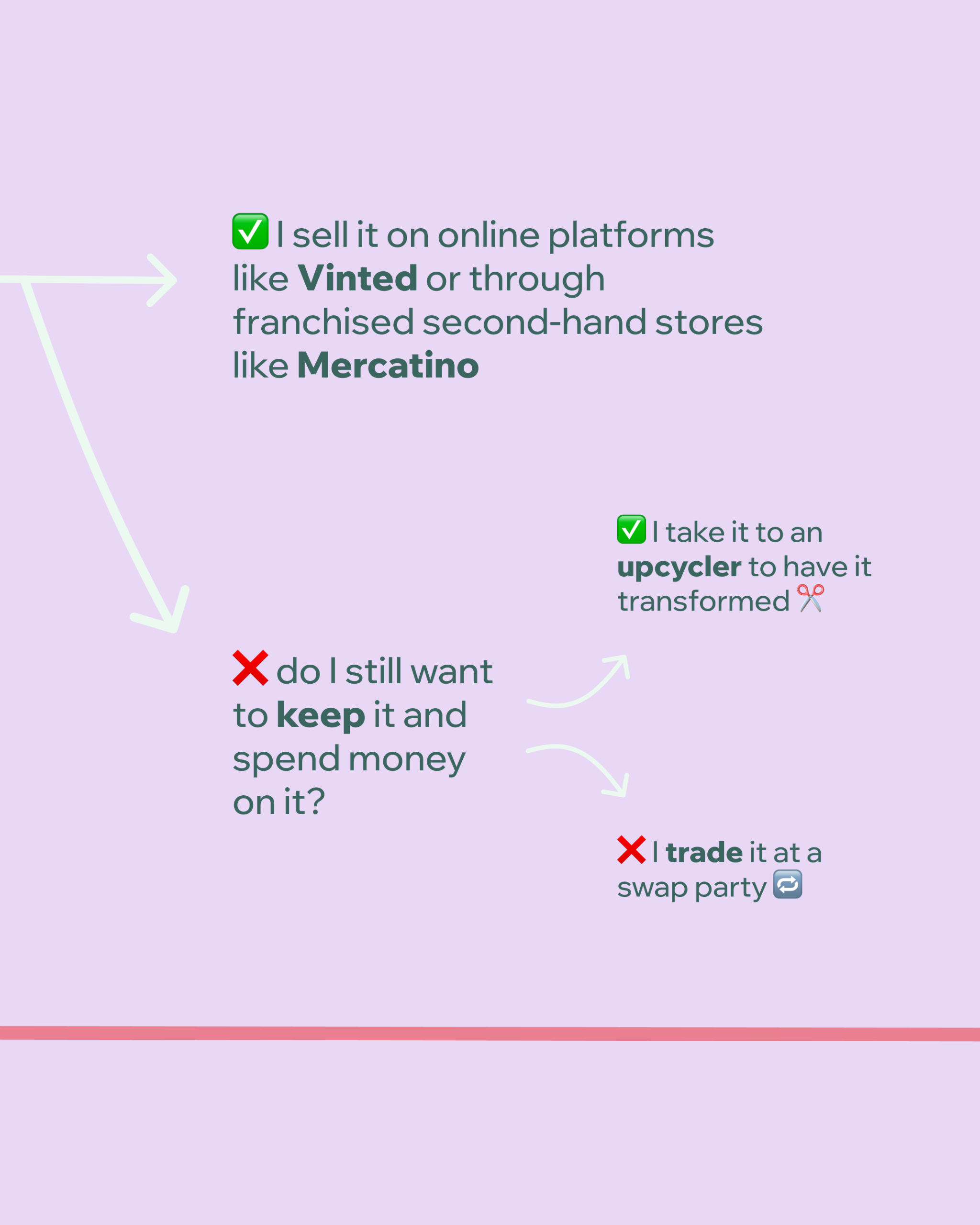
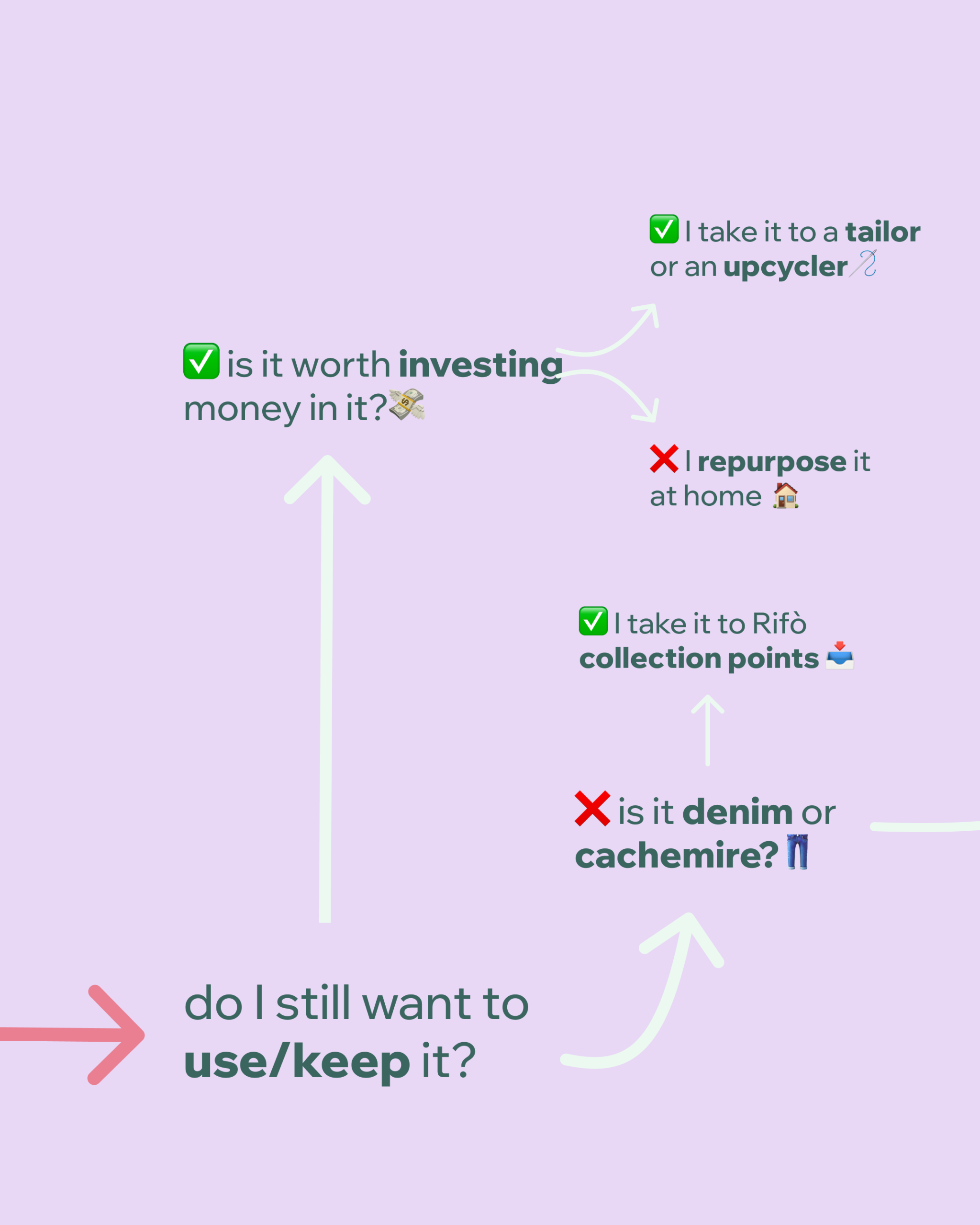
Where Should It Go?
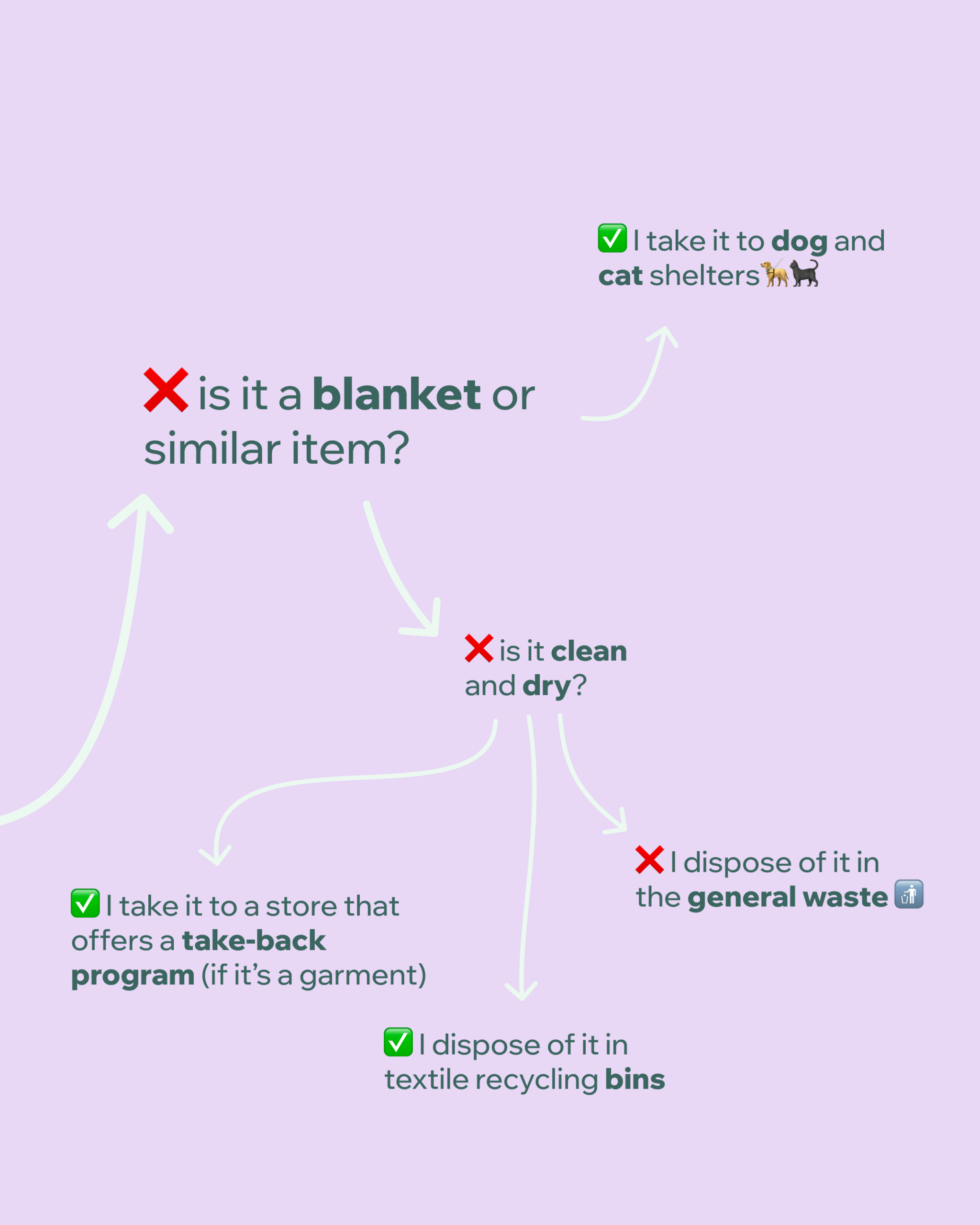
People often ask us if they can drop off their clothes or, alternatively, what to do with them. Atelier Riforma does not collect discarded textiles directly, but we support the organizations that do so, helping direct each item to the most sustainable destination possible.
If you’re a private and don’t know how to handle the textiles you no longer use, this guide can help!
Still Have Doubts?
Impact Aligned With The 2030 Agenda
SUSTAINABLE DEVELOPMENT GOALS (SDGs)

How We Contribute
Circular valorization of existing materials and reduction of virgin resource exploitation. Waste reduction. Activism and consumer awareness about circular and responsible practices.

How We Contribute
Sustainable and transparent management of textile waste collected in cities. Active engagement of companies, citizens, and institutions in a more circular ecosystem. Support for local collaborations through a circular economy approach.

How We Contribute
Promotion and support of small artisans, emerging brands, and social tailoring workshops. Enhancement of artisanal skills connected to circularity (repair, upcycling, etc.).
We Contribute Concretely to the Ecological and Social Transition.
Atelier Riforma operates in line with the Sustainable Development Goals of the 2030 Agenda, contributing to environmental, social, and economic targets through technology, local projects, and cultural initiatives.
Every initiative is designed to reduce the fashion industry’s environmental impact and create shared value.